Showing posts with label recording. Show all posts

2026/04/09

Go Back to the House


At work in the corridors

Splatterhouse is a horror-themed video game released by the Japanese developer Namco in 1988 and later ported to the home console Turbografx-16 in 1990. Heavily influenced by films like Friday 13th (1980), The Evil Dead (1981) and Re-Animator (1985), the plot follows students Rick and Jennifer as they seek shelter from a storm in the mansion of Dr. West, a missing parapsychologist. Because of rumours connecting the mansion and its inhabitants to weird, terrifying experiments, Dr. West’s gothic pile is known locally as the ‘Splatterhouse’. Despite this reputation (and in the tradition of the finest horror film decision-making), Rick and Jennifer prefer to be in the Splatterhouse than out in the rain.  Upon entry, the door slams shut behind them and the pair are plunged into darkness. Jennifer screams, Rick passes out. When Rick wakes up Jennifer is gone and he is different. Rick has been possessed by one of the entities in the house, a sentient ‘Terror Mask’. Fusing itself to his face, the Terror Mask transforms Rick into a monstrous Jason Voorhees-type figure. Enraged and guided by the mask, Rick sets off into the endless corridors of the Splatterhouse to rescue Jennifer. Along the way pummels into oblivion all the demonic creatures he encounters. This – rather than the rescue – is the main task of the game: it is, after all, a side-scrolling beat ‘em-up. In the event Rick doesn’t rescue Jennifer, but instead destroys hundreds of creatures and burns the mansion to the ground.

Rick’s fascination / entanglement with the mask is an apt symbol for the appeal of the game. Lurid and often grotesque, you shouldn’t like it, but you do. As with most beat ‘em-ups there’s queasy satisfaction to be gained from the endless carnage you can mete out to enemy after enemy. Thanks to this graphic content the game was one of the first to receive a parental warning. Like Doom (1993) and later Carmageddon (1997), Splatterhouse holds a particular place in video game history. It marks the point at which games started to get harder, not just in terms of difficulty but also in terms of what they were prepared to show. Splatterhouse and these others, as well as drawing on cult cinema of the early-to-mid 1980s, also paralleled the return of various ‘video nasties’ to the high street across the later-1980s and 1990s. Companies like VIPCO had done a VHS re-release of Lucio Fulci’s The House by the Cemetery (1981) in 1988, and if you watched that along with their 1992 version of Michael Pataki’s Massacre Mansion (1975), you’d have more than enough content to put together a hypnagogic version of Splatterhouse: The Movie.  There are better side-scrollers than Splatterhouse, of course, but few in my view that better manage to crystallize up the very particular collision that occurred in 1990s popular culture between horror movies and video games.

When Splatterhouse 2 arrived on the Sega Mega Drive in 1992, the graphics had improved and the story had extended. The sequel was set three months on from the first and found Rick plagued with nightmares about his failure to rescue Jennifer. Meanwhile, having broken into pieces at the end of Splatterhouse, Splatterhouse 2 finds the mask having re-assembled itself and it begins to talk to Rick. "She doesn't have to die, Rick […] We can save her […] You need me", it says before adding a further clarion call: "Go back to the house." What the game calls the mask’s “infernal temptations” eventually prove to be too much. Rick puts it on again, picks up his nail-studded plank and heads off towards the charred remains of the West mansion where he does, finally, find Jennifer. 

Recently I came across a (very overpriced) copy of Splatterhouse 2. I was infernally tempted to buy it. Like Rick with the Terror Mask, I felt myself drawn to it. It would, however, have been a distinctly talismanic purchase. I would not have been buying it for the dubious pleasures of the game alone. I wanted the cartridge because it would have conjured something else. It would have brought back my memories of the first Splatterhouse; not a memory of the event of the game, - the ‘how’ and ‘why’ of it, the actual playing of it, but more like the ‘when’ and the ‘where’ of it: the place in which and the time at which I first came across it. To be more specific, buying the cartridge, I thought, would have brought into sharper focus a memory of encountering the original game in the mid-1990s, by way of an old arcade machine in the foyer of the Unit Four Cinema in Brierfield.

*

Brierfield is a town just outside Burnley in Lancashire. According to H.J. Hill, writing for the website cinematreasures.org, Brierfield Cinema was the first “purpose-built cinema” in Burnley. It opened on 15 July 1915 with a capacity of around 600 seats and continued trading as a cinema until 1959. From there the building went through a series of changes: 


In April 1959 it opened as a sports hall; that failed. It then opened as the Rockin’ Shoe Disco on Sunday 21st July 1961; that too didn’t last. It opened on 15th December 1961 as the 77 Club: cabaret and gambling. That went well until changes in the gambling laws affected business and it closed in November 1967.


From here the building re-opened as Unit Four Cinemas in July 1969 before the Apollo Group in took over ownership in 1989. My family and I started going to Brierfield just before the handover, first to see Crocodile Dundee II (1988) and then The Adventures of Baron Munchausen (1988). The latter gave rise to my earliest attempt at film reviewing – trying to tell my horrified primary school teacher about this film I’d seen at the weekend that involved torture, decapitation and the screeching, skull-faced figure of Death. Later on, my father and I went there to see Judge Dredd (1995) and Mortal Kombat (1995). I was not quite fifteen. No matter. One of the many great things about Brierfield was that they would let you in for anything. This was mainly because during the late 1980s and into the 1990s, footfall was low (or so it seemed) which had the effect of making any visit akin to a private screening. Such unintended privilege, unsurprisingly, was also the cinema’s downfall. In 1997 Apollo opened a larger multiplex closer to Burnley’s town centre. Brierfield was given little time to compete. The new cinema opened in May 1997  and by July of that year, Brierfield had closed its doors for good. As Hill reminds us, its last screening rota was the remarkable quartet of Batman and Robin, The Fifth Element, Con Air, and Beavis and Butthead in America. What a way to go. New businesses took over the site soon after, and used it as a single storey site. Most recently, the building was trading as a Dixy Chicken take-away and Maria’s World Food Store.

Going to the cinema in the 1980s and 1990s involved a lot of enticing glimpses. When you were waiting in the foyer or walking through the corridor and the doors of a screen opened, you craned your neck trying to get a look at one of the films you weren’t there to see. One of my earliest cinema visits was to Accrington’s Unit Four (closed in 1990). This was about 1987 – the time of the first Robocop – and the sheer pull of it - the thought, when sat watching that year’s Disney film, that such sci-fi carnage was playing out just next door - was almost irresistible.

Brierfield probably would have let you in for Robocop. All comers would have been welcome. But despite its ‘unfiltered’ approach to admission, it was also not short of the hypnotizing glimpses – its own internal otherworlds, you might say. Aside from the posters on the walls – some of which stayed up for a long time (The Adventures of Milo and Otis (1989), anyone? Cutthroat Island (1995)?), there was also an array of arcade machines in the upper foyer, three at least. All unlabelled. Black boxes that stood there like the hidden-in-plain-sight recruitment machine in The Last Starfighter (1984). These three included Splatterhouse. Playing it after seeing a film was like a grisly extension of whatever fantasy had been shown on screen. The game was not so much as task – can you beat the enemies? – as a mapping machine: how far can you go? Charging through the mansion felt like a way of extending the films – real or imaginary – while they were still in the air. Post-credits, out into the light, the game, already saturated with weird film energy offered a way to stretch the cinema into longer, labyrinthine corridors.

*

In his novel The Director’s Cut (2000), Nicholas Royle has one of his characters – the production assistant Angelo – compulsively wander London in search of lost or abandoned cinemas. It’s a visionary project in which maps, film listings and architectural traces combine into Angelo’s all-consuming psychogeographic fugue. Filmmaker Chris Petit – namechecked in the novel – wrote in his classic essay ‘Newman Passage’ (1993) that finding film locations across London like Maryon Park (used in Blow-Up (1966)) and the sinister title alleyway that appears in Peeping Tom (1960), was a way of orienting himself after he had first arrived there to work for Time Out. For Petit, these visits became a way of gaining purchase; of carving out personal territory in the otherwise anonymous capital. Angelo’s project covers many of the same zones, but travels in the opposite direction towards sites of projection rather than initial recording, his guiding thesis being: “where a film is shown is more important than where it’s shot”. Angelo archives the lost cinemas via a collection of empty VHS cases, each one acting as a spatio-temporal reliquary. His ‘copy’ of Petit’s Chinese Boxes (1984) carries the note “Roxie, 9.12.86”, a cinema that closed in March 1987. The box is a pocket of the lost cinema’s air, something of the emotion the space would have absorbed, night after night, as successive films were projected there. Angelo’s Chinese Boxes, then, “is more a faithful record of [his] experience of Chinese Boxes than a copy of Chinese Boxes itself.”

The same, I believe, is true of the Splatterhouse 2 cartridge. As a container (‘cartridge’ come from cartouche, a “full charge for a pistol”) it contains more than a circuit board. It is very much not the game played in Brierfield, not even a copy of it. It is, though, a box that sparks the necessary charge of memory; a box that contains the required psychic gunpower to blow the necessary hole in reality big enough to see the vanished corridors beyond. A way of getting back there and, crucially, then. Angelo in The Director’s Cut was in search of “the Museum of Lost Cinema Spaces”: a grand cathedral of the ideal, a sanctuary away from the storm of heavy black clouds. My lost cinema space is more singular, more specific – a very particular venue that has, nonetheless, continued to carve out a territory in the mind since it closed. Seeing the cartridge filled in the remaining space in the synaptic gap. It brought it back and held out the possibility of a return, or sorts. Sometimes, when there’s a persistently resonant chamber rooted in the brain, you need the right kind of key to open it up.

Ok then: sold. I’ll buy it. I won’t play it. I’ll use it instead. I’ll use it to go back to the house. 


2024/08/15

Viewing Notes: Terrorism Considered as One of the Fine Arts


Vienna Vertigo: Peter Whitehead / Michael Schlieman waiting for Lenoir

In 2010, while working with Peter Whitehead, I was dispatched to that year’s Bradford Film Festival. The year before, the festival had honoured Whitehead with their Fellowship Award while screening the highly acclaimed retrospective programme put together by Paul Cronin at Sticking Place Films. The success of that programme, particularly at the 2006 Viennale, had spurred Whitehead onto another large-scale project, a full-length feature film based on his novel Terrorism Considered as One of the Fine Arts (2007). I’ve written about this project previously, as I went onto develop a screenplay volume based on the significant amount of material Whitehead amassed during its production. The film, Terrorism Considered as One of the Fine Arts had its premiere at the 2009 Viennale, and Whitehead asked me to go to Vienna to introduce it – a good but deeply weird trip that deserves a lengthy essay of its own. Bradford was essentially the same occasion. Organised by the brilliant Mark Goodall, it was an evening screening that functioned as Terrorism’s UK premiere.

After making such as splash with the retrospective, news of this new Whitehead film caused a certain degree of anticipation among those previewing the Bradford’s 2010 edition. As Mike Everleth, writing in the Underground Film Journal put it:

[…] the most thrilling screening of the entire 10-day affair is the new film by British filmmaker Peter Whitehead, Terrorism Considered as One of the Fine Arts. In the U.S., Whitehead is a “lost” filmmaker from the underground’s heyday in the ’60s, being left out of most histories of the underground movement. Whitehead directed several influential films, including Wholly Communion and The Fall, before dropping out of filmmaking in the mid-’70s.

Whitehead as ‘lost’ film-maker was something the retrospective and a lot of the activities that came after – edited volumes, essays, archive consolidation – tried to redress. Admittedly, though, the idea did help confer a certain aura upon Whitehead’s work, the sense that when watching his films you were seeing something long hidden that could change how you understand the 1960s and documentary film. Terrorism, when it arrived, reiterated this sensibility. It was along, frequently digressive but nonetheless fascinating film account of Whitehead’s movement through Vienna’s geographic and artistic zones. It was not quite the triumphant ‘return’ to narrative cinema Whitehead touted it as and, admittedly, there is much about it that doesn’t really work as a film. Seen, though, as a personal, involuted and quixotic video journal, and it becomes a lot more rewarding.

The notes below represent the introduction speech I gave before the screening at Bradford. Whitehead was very keen to attend retrospective screenings during this period, less so individual events. He did attend a later Terrorism screening in Paris at the La Cinémathèque française. Sending me in his place, though, did not suggest he was in some way uninterested. Quite the opposite. He was extremely interested to hear of audience reactions. In both Vienna and Bradford, he was always on the phone - giving instructions, asking questions - before and after each screening. As was his wont, Whitehead was also interested to hear of any synchronicities observed or experienced. During the Bradford trip he was delighted to hear that my hotel had put me in their ‘Whitehead Room’ for the night.

For a while after its premiere, Terrorism was viewable only via selected screenings and Whitehead’s own self-produced DVDs. Since then, it has appeared online. One posting via Plagiarisme.Inc, a You Tube channel established by Whitehead in 2014, has the film in three separate chapters. This should be considered Whitehead’s preferred mode of viewing. Another more recent – and most likely unauthorised – posting courtesy of Celluloid Monk, presents the film as a single video.  


*

Whitehead as Schlieman, Schlieman as Whitehead. 


You are about to see Terrorism Considered as One of the Fine Arts, which represents Peter Whitehead’s return to feature-length film after a sizable hiatus.

When placed alongside his other work, particularly the documentaries he made in the 1960s such as Wholly Communion (1965) and The Fall (1969), Terrorism initially seems to mark a significant departure. In its degree of formal experimentation and concern with aspects of media technology there is an overlap with the likes of The Fall but, overall, Terrorism moves closer to the realm of fiction than documentary. But of course, that distinction is not entirely stable which is one of the film’s many interesting features.

Where Terrorism does establish continuity with Whitehead’s previous projects is in the case of his work as a novelist. Whitehead has been writing throughout his career and Terrorism is, in fact, an adaptation of the novel of the same name. Terrorism, the novel, first published in 2007, is part of Whitehead’s ‘Nohzone Trilogy’, a sequence of strange espionage texts that continues with Nature’s Child (2001) and concludes with Girl on the Train (2003). These hugely intertextual novels were originally published online via Whitehead’s website Nohzone.com. At the level of content and form they are very much indebted to the specificity of this medium. In terms of plot, the outline the attempt of an unnamed narrator to track down one Michael Schlieman, a missing MI6 agent who has disappeared during a counter-terrorism operation. The narrator tracks Schlieman by retrieving, reviewing and reconstructing the various memoirs Schlieman has written about his time in the intelligence services. Uploaded onto a series of tumbleweed websites, these screeds contain letters, e-mails, journal entries and metaphysical rants. As a reading experience it’s not unlike William Burroughs’ The Last Words of Dutch Schultz (1970) meets Peter Wright’s Spycatcher (1987). This material gradually reveals that the dying Schlieman, possibly in the thralls of an intense opium high, had become obsessed with and gone in pursuit of Maria Lenoir, the head of a eco-terrorist cell and the intended object of his surveillance.

In the film, this scenario is transposed to Vienna, and we follow Schlieman – played by Whitehead himself – as he drifts around the city on the two circles of the Ringstrasse. As he moves clockwise and counter clockwise, he tries to locate and encircle Lenoir and the other women who make up her group. The central conceit relates to Lenoir’s planned act of terrorism, one performed as an act of retribution in response to the sinking of the Greenpeace ship Rainbow Warrior. This occurred in 1985 when the French intelligence agency, the DGSE, detonated two bombs in the hull of the berthed ship to prevent it protesting French nuclear testing in Moruroa. The incident led to the death of the Greenpeace photographer Fernando Pereira who was trapped on board when he tried to retrieve his camera. Pereira is one of the dedicatees of the film. In marshalling their response to this actual event, Whitehead presents his fictional terrorists as vengeful furies, symbolic manifestation of Gaia, the Earth Goddess. Much of this plot-structure is taken from the novel which is very much recommended. However, where the novel frames Schlieman’s experiences within a narrative of textual reconstruction, the film positions the viewer at the heart of this pursuit. Thanks to Whitehead’s often POV-style camerawork, we directly inhabit Schlieman’s perspective as the events unfold and, possibly, as his mind comes apart.

This interiority is key to what Whitehead was trying to achieve with Terrorism. He accumulated the project’s raw footage on the streets and trams of Vienna between 2006 and 2008 using lightweight digital video equipment that easily allowed the maintenance of a first-person viewpoint. These tapes were essentially a record of the period he spent in the city: it is footage of Peter Whitehead meeting people, travelling on the tram, talking about ideas, attending events. However, once this material is edited into his fictionalised frame the on-screen figures are rendered as both real and imaginary. Whitehead becomes Schlieman and the people he meets become terrorists. Here Whitehead is using the standard narrative of investigation, the basic approach of the spy and detective genres, to make a wider point about the transformative capabilities of individual consciousness. Through the figure of the psychologically deteriorating Schlieman, Whitehead explores the fluidity and productive potential inherent to the act of remembering and misremembering.

Within the film Whitehead-as-Schlieman acts as a sort of Tiresias figure, mirroring the way that this mythical character is represented in T.S. Eliot’s ‘The Waste Land’ (1922). He is the perpetual spectator. He remains somewhat detached from events, but it is also his presence which unites and motivates the narrative. The thrust of the film is that while Whitehead / Schlieman encounters a whole series of different people they are, essentially, all the same woman: they are the faces and voices of the eternally absent Lenoir that Schlieman projects onto all those around him.

This notion of an all-encompassing subject position also works as an oblique comment on Whitehead’s use of technology. The film makes self-conscious reference to online communications, mobile technology and digital video. One of the dominant formal features of the film is the extended use of captions and on-screen texts. These references to literature, philosophy and film are visual representations of Schlieman’s interception and interpretation of the e-mail communication between the members of the activist cell. They also provide a running textual commentary on the on-goings events of the film. Whitehead thus folds into the texture of the film, the operational traces of the digital economy, the tools that facilitate the contemporary ‘me’ culture: the endless live feed of self-absorbed blogs, tweets and chat rooms.

Incidentally, it’s on account of this technical specificity that Whitehead doesn’t want Terrorism to be seen as a ‘film’ per se, but as DVD, something that can be put onto the shelf alongside your books and consumed in the same way. It is intentionally split into three chapters in order to encourage repeated and extended viewing. You can watch one chapter, go away and think about it, come back and watch another, Maybe even watch them in a different order.

While stylistically very different, Terrorism could productively be placed alongside Nicholas Roeg’s Don’t Look Now (1973) and Alain Tanner’s In the White City (1983) insofar as they each use images of transit through urban terrain to highlight and exacerbate changes in the memory functions of the protagonists. However, where the thematic emphasis of these two examples is upon images of decay, in Whitehead’s film the hallucinatory journey is creative. As Schlieman’s idiosyncratic camera I/eye traverses the multiple circles of Vienna – the city of dreams the Freudian unconscious and The Third Man – it is as if he is making unexpected synaptic connections across different artistic, philosophical and historical zones.   

*


2019/08/29

The Copse

As seen on the return journey. 


28/06/2019. Been quite a while since the last trip. Parking up now and waiting. Across the road there’s a clutch of trees jutting out of the verge. The sun is high and is flickered by the branches. In the bleed the video shimmers as it struggles to pick out the detail.
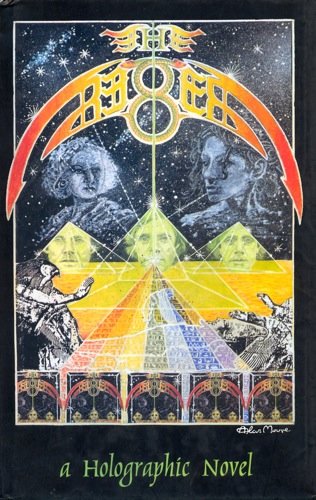
Peter Whitehead’s The Risen (1994) follows three characters – a crystallographer, an actress and a sculptor – as they retreat to an isolated house in Cornwall. There they entangle themselves in a sequence of intense, shamanic rituals: initiatory processes that help them establish contact with John, the novel’s fourth character. John is a Syd Barrett avatar, a psychonaut who has vanished leaving only a set of coded messages behind. Throughout the novel he exists as an absent presence, an entity who haunts the text just as much as he haunts the characters. Reading like a smart-drug infused cut-up of H.P. Lovecraft and Jacques Derrida, The Risen unravels following the progress of these personalities as they intersect, interfere and entangle with each other, on numerous planes at once.
In The Risen, what happens on one plane of existence influences those that stand in horizontal and vertical proximity. The past and the present; the ‘real’ world and the afterlife; the textual realm and the digital; they each collide and intermingle as the novel gradually works its way into a mind-bending field of synchronicity and simultaneity. Whitehead called this structure holographic. He likened The Risen to a half-silvered mirror through which a laser is fired and which produces, in the spaces between, a ghostly, two-dimensional image that appears also to stand in three dimensions. 

Image result for the risen whitehead
1997 paperback edition 
Risen, The: A Holographic Novel: Peter Whitehead
1994 hardback edition


28/06/2019. On the turn-in there was a familiar figure strolling through the village. Recognized the gait and stance. Time to consider my own. Head in to the place, down a path of heavy humming. Mixed feelings, most to do with the reasons for the absence. But this much said, such preparations are, and should be, for naught because – of course – it is not my day.
Whitehead wrote many novels, but during the time I knew him – first as a friend, then as a collaborator and then, for a while (2009-2014) as director of his archive – he consistently referred to The Risen as his touchstone work, a book that summed up how he wrote, why he wrote and what he wrote about. The novel had its origins in Nighttrip (1969) an unproduced screenplay about a long, mystical drive into the heart of an occult system. Other prose versions followed as Whitehead moved through the 1970s and into the 1980s via different countries and different lives: film-maker, writer, falconer. The version published in 1994 contained aspects of these prior iterations but it also drew on the heady underground atmosphere of the early-1990s, becoming in the process something of an unconscious lightning rod for the neo-counterculture of the late twentieth century. The cult independent publisher Creation Books initially had plans to issue The Risen, it was listed and is still carried by Midian Books and when published by Hathor it generated interviews and features in the likes of Esoterra magazine. Whitehead read from The Risen alongside Iain Sinclair, Chris Petit and Brian Catling at Disobey’s Subversion in the Street of Shame event in July 1994 and references to books like Robert Temple’s The Sirius Mystery (1976) – the kind of speculative Egyptology that reached a critical mass of popularity at the turn of the millennium – peppered the text. In short, it was exactly the kind of novel you could read alongside Clive Prince and Lynn Picknett’s The Stargate Conspiracy (1999). 


Another important influence was Rupert Sheldrake’s concept of morphic resonance, an idea he outlined in two Whitehead favourites, A New Science of Life (1981) and The Presence of the Past (1988). In short, morphic resonance describes a form of collective memory in which self-organising systems pass on information through patterns of repetition, cycles that appear able to extend influence across vast swathes of space and time. Sheldrake draws on plant sciences and an array of animal behaviour to explain this model of inheritance and to make a case for its significance as regards such doubted phenomena as telepathy. In The Risen, Whitehead used a similar concept to explain the psychic communication between his ‘earthly characters’ and the vanished, transformed intelligence calling itself John. He termed it ‘The R-Field’, the ‘R’ standing for ‘reincarnation’, amongst other things. For Whitehead, this described an aether-like medium in which the trans-dimensional and trans-temporal events of the novel take place. Whitehead also gave the R-Field a powerful symbol within the text, a location that the narrative obsessively returned to: a small inland clearing of trees within the Cornish landscape that he called, simply, the copse.
28/06/2019. After the Church, the plan was to drive back round the old haunts – the first house, then the car park island with its smattering of shops. It's full when I get there so there’s no photo. The house is also hard to find, even though everything seems a lot smaller than I remembered. The very first visit to the house had been a ghostly pursuit, the rest a kind of pupillage or initiation.
The copse is a thin space, a locus in which the various planes that flow through the novel converge into a point of intersection. As the novel progresses, it becomes clear that the copse is the place where John disappeared, or rather moved on. Initially, Whitehead’s use of the location recalls John Michell’s speculations on leys and ceremonial mounds as meeting places between men and gods. That said, for Whitehead, the copse does not relate solely to ideas from the Earth Mysteries scene. He offers it as an interstitial location, the novel’s holographic centre; a site at which one thing becomes another and in between a third space momentarily opens. As describes in The Risen, it is the letter ‘r’ which separates the word ‘corpse’ from ‘copse’. One word contains the other even when it is not articulated. So too with John’s progress in the novel. He’s not there, but neither is he entirely absent. His presence ripples through the text, felt and recognised but never fully manifest. There is no ‘return’ from the elsewhere but an increasing re-enactment on the part of those who remain; a growing awareness that their exploration of a set of interconnected texts is a re-plotting of John’s narrative. In the esoteric world of The Risen, this involuted unfolding of one narrative within the space of another is intended to describe nothing less than a system of reincarnation.
28/06/2019. Leaving the place, I’m circling: I’m driving round the same network of tight, overcrowded roads that used to lead from one of the houses to another. We worked at a few different locations dotted around the area and they formed a kind of circle around the town bordered by the vestigial countryside. New housing developments had ornamental lakes hewn out of the ground, pushing back the tree line. Going through the motions, other journeys come back like the time I drove there blind in thick fog. Others I spoke to reported appearances up and down the road. Signalmen at the crossroads jostling with phantom hitch-hikers. On more than one occasion, when driving with him, he would point to a gathering of trees and announce that it was the copse. He seemed to be in search of it. Seen from the moving car, these isolated alcoves blurred into strange shapes: static points in the landscape lost in flicker. Difficult to find on a return journey and even harder to capture in an image. The video would shimmer as it struggled to pick out the detail. 

*

British Literature in Transition / The Spiderhood


I was very happy to be involved in this new volume from Cambridge University Press: British Literature in Transition, 1960-1980: Flower Power. Edited by Kate McLoughlin, its an excellent volume featuring some wonderful essays covering the entire period. For my part, I wrote on psychedelia and psychedelic literature. Abstract: 

The Spiderhood: Psychedelic Literature, Literary Psychedelia and the Writing of LSD

With reference to Harry Fainlight’s ‘The Spider’ (1965), Michael Moorcock’s The Final Programme (1968) and Alexander Trocchi’s ‘Drugs of the Mind’ (1970) (amongst others) this chapter explores the intertextuality of psychedelic writing and assesses the possibility of identifying a psychedelic literary discourse. Coined by Humphry Osmond and Aldous Huxley in 1957, ‘psychedelic’ was offered as an alternative term to ‘psychotomimetic’ and was intended to encapsulate the apparently generative rather than imitative qualities of LSD and mescaline. The word’s rise to cultural prominence during the 1960s mirrors a transition within the personal sphere as well as the surrounding political and economic macrocosm of post-war Britain. Literary psychedelia, the chapter argues, is writing that combines a particularized subject position with the rich cultural resonance that Huxley fed into the term in order to construct a formal structure reflective and interrogative of these wider social shifts.  

Key Words: Psychedelia, Psychedelic, hallucination, experimental, drugs, recording, the sixties, counterculture, underground literature. 

*

2019/08/11

Folk Horror Revival: Otherworldly and Urban Wyrd

39294247urbanwyrd1.jpg


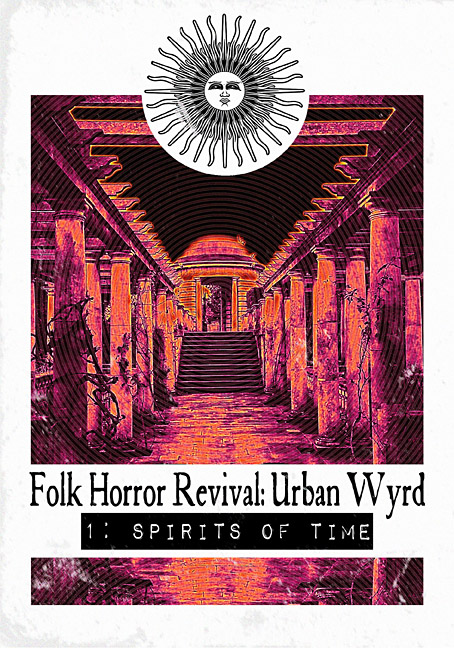
The good people at Folk Horror Revival and Wyrd Harvest Press continue to publish brilliant tomes based on their events and online activities. I was asked to contribute to two of their recent volumes: Otherworldy based on a live event at London's British Museum in 2016 and Urban Wyrd 1: Spirits of Time. I participated in the British Museum gathering and the volume includes a version of my talk: 'Sinister Networks'. This, in turn, was an expanded piece based on two previous posts here about canals, snakes and mythology. Urban Wyrd features 'Voices from the Ether', a text based on the talk about EVP, Iain Sinclair and ghost voices I gave at Brompton Cemetery as part of London Month of the Dead.  

My thanks to Folk Horror Revival for having me involved. 


Black Box Text


Related image

[Posting here the full text of a piece originally written in 2013 for the Literature / Technology / Media hub at the University of Cambridge]


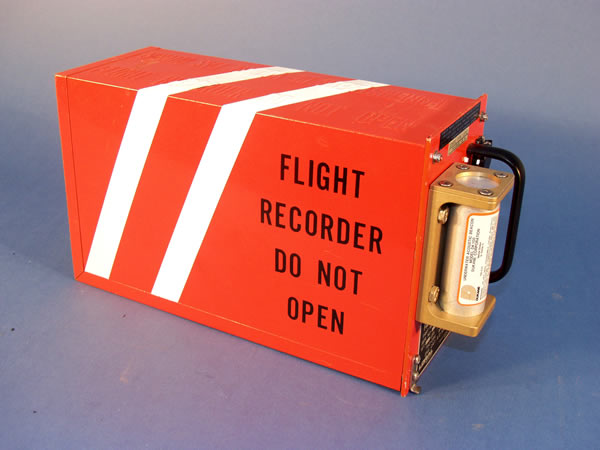
Amongst volumes on Dali, Francis Bacon and Helmut Newton, J.G. Ballard’s library also contained The Black Box (1984) edited by Malcolm MacPherson. The book is a collection of transcripts taken from the Flight Data Recorders of aeroplanes involved in “air disasters”.  These ‘black boxes’, consist of a central recording medium (first wire, then tape, now currently digital matter) sealed in a steel outer casing that is robust enough to survive high impact, intense heat and immersion in water. The devices are typically installed into a plane’s tail assembly in order to record in-flight instrument data and cockpit dialogue. In the event of a crash the units can, in theory, be recovered intact from the wreckage in order to reconstruct the sequence of events – computational and conversational – that preceded the accident. 


The Flight Data Recorder has been an industry standard since 1960. Versions have been in use since 1939 but mainly in the aircraft research industry. It was first outlined for use in civilian aviation with a specific post-crash application in 1954 by David Warren, an aeronautical researcher at the Australian Defense Department. His paper, “A Device for Assisting Investigation into Aircraft Accidents” streamlined the problematic photographic functionality of previous models and gave rise to the 1957 prototype, the Flight Memory Unit. At this point in the object’s history, ‘black box’ can be revealed as something of a misnomer: the devices were designed to be, and have remained, bright orange to facilitate ease of identification and retrieval on the ground. The term seems to have stuck due to journalistic shorthand and possibly as a residue of its initial photographic incarnation. Early models were essentially small, sealed darkrooms not designed with crash salvage in mind.


Although technically imprecise, ‘black box’ nevertheless carries accuracy as regards the imaginative significance invested in the device. In circuit design, ‘black box’ describes a component that is understood not on the basis of its mechanism but in relation to its input, output and processional characteristics, the manner in which the input changes as a result of its transfer through the device. Similarly, the Flight Data Recorder often occupies the interstitial position common to the symbolic reception of many recording devices: it hovers as an invisible mediator somewhere between operation and content. Frequently brandished for the press at the edge of an accident zone, the recorder is often taken as a talismanic marker that signals not the start of an analysis but the completion of an investigation. A solid state amongst the residue of the plane, the black box functions as a perfect synecdoche: one surviving part that at a human and material level, can reassemble the disintegrated whole. Once it is found, the external reportage can withdraw as the public narrative of the plane crash has, in a sense, come to an end. 


John Varley’s short story ‘Air Raid’ (1977) and later novel Millennium (1983) are both built upon this symbolism of holistic resurrection. In each, a black box is recovered containing a recording that analeptically opens out at an exponential rate. It narrativizes the crash central to each text, as well as a panoramic scenario of time travel and impending catastrophe. Varley’s box is a narrative engine that quickly disappears under the weight of its contained significance. For Ballard, his attraction to the device is also connected to its narrative results. Writing in a 1998 review of MacPherson’s second edition, he explains that his fascination with the transcripts lies in their presentation of slowly accumulating decline:


What stands out […] is how quietly catastrophe creeps up on its victims. A gradual fall in hydraulic pressure, an unexplained loss of fuel, a hint of smoke in a lavatory, are noted half an hour before the looming crisis.


However, what is also emphasised in Ballard’s account is the informational poverty that the neutral ear of the recorder necessarily retains. As Iain Sinclair noted when describing the myth of Ballard’s own archive, ‘nothing intimate survive(s)’:


[…] the transcripts convey only the sketchiest impression of the atmosphere in a stricken aircraft as the captain and crew wrestle with their controls. While one crippled system collapses on another, horns blare, lights flash and recorded voices shout: "Pull up! Pull up!"

Yet no one panics. Even in the final moments, as the doomed aircraft heads towards the ground at 400 miles per hour, only a stoical regret is sounded, like the simple comment, "We're dead", made by the co-pilot of a Lockheed cargo plane in the seconds before the end.


That final announcement encapsulates the (im) possibility of the black box. Along with examples such as Edison’s spiritualist hopes for his phonograph and Konstantin Raudive’s fascination with Electronic Voice Phenomena, the imaginative economy of the Flight Data Recorder helps to maintain the post-mortem fantasy associated with recording media. It seems to work against annihilation by preserving voice and experience in the aftermath of their destruction. And yet, what Ballard highlights is the skeletal, denotation of ‘the end’. It exists and can, of course, only exist as a statement of an impending event rather than a survival of the event itself. The investigative specificity of the Flight Data Recorder coupled with the nature of its most significant material foregrounds the operational reality that underpins the projected phantasy:  a capacity for re-play rather than mediumship.


2019/04/11

Films on Vimeo

Still from Distress Signals

Still from Ghost Walk

I’ve recently put a selection of videos on Vimeo. These are short films I’ve made with a number of collaborators: David Ashford, Miriam Austin and particularly Evie Salmon. They feature footage originally shot in New York, Paris, London and other parts of the UK. Combining this ‘found footage’ with specially prepared voice-overs, the films variously look at ‘dead’ media (video formats), strange locations (London churches, coastal areas, military buildings, sites of literary interest) and the link between image and spoken word.


More films will be added to the Vimeo page in due course. I’ve been making videos for years and have a large archive of tapes to work with. Some of the films are old, some are ‘new’ based on ‘old’ material and others I’m in the process of shooting. The current selection includes:

Ghost Walk: a film made with David Ashford about the churches featured in Iain Sinclair’s Lud Heat (1975).

Distress Signals: a piece featuring footage of New York’s Coney Island, pre-Hurricane Sandy. Much of this area has now changed, almost beyond recognition. Some of these images appeared in an issue of the film magazine Vertigo.

The Bird: a video based on a performance piece by the artist Miriam Austin.

Territories: a video that tracks William Burroughs across New York, Paris and  London.

Codebreaker: a film about Bletchley Park, their coding machines and the peculiar corridors in the on-site huts.

Headlands, Trailer: a short trailer for the Headlands live show performed in Cambridge as part of the Festival of Ideas.  

Distress Signals, The Bird, Territories, Codebreaker and Headlands, Trailer were each made in very close collaboration with Evie Salmon. It’s her voice on the soundtracks. I shot and prepared the footage, she provided the spoken word element and the final composition of the finished films was a joint effort. These videos reflect and inform the live performances we do together which often involve spoken word, sound elements and film projections. Some of this material will be featuring in Territories, the upcoming book Evie and I are publishing via our friends at Contraband. As a multimedia artist, a brilliant writer and an interdisciplinary academic, Evie is a true polymath. It has been great working with her on these films and I'm looking forward to sharing the results of our current and future collaborations. 


*